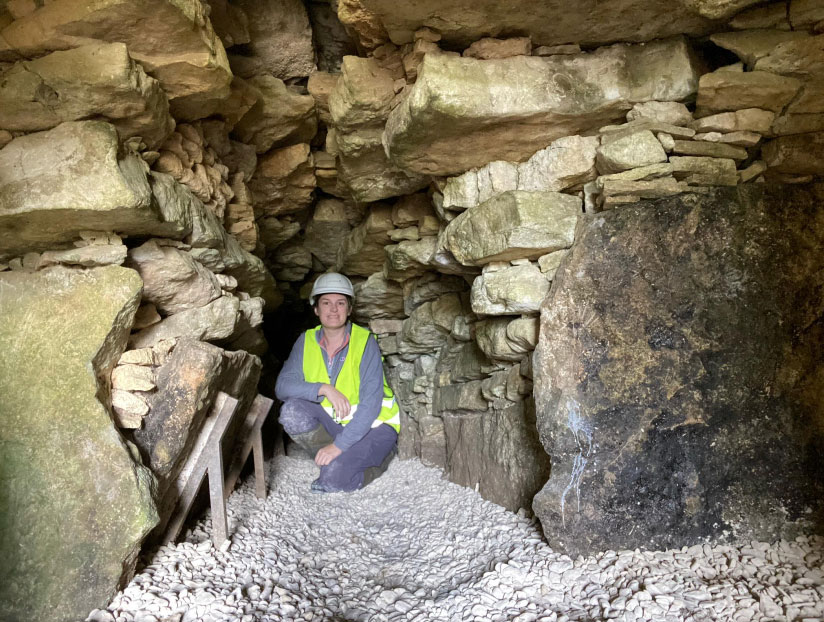
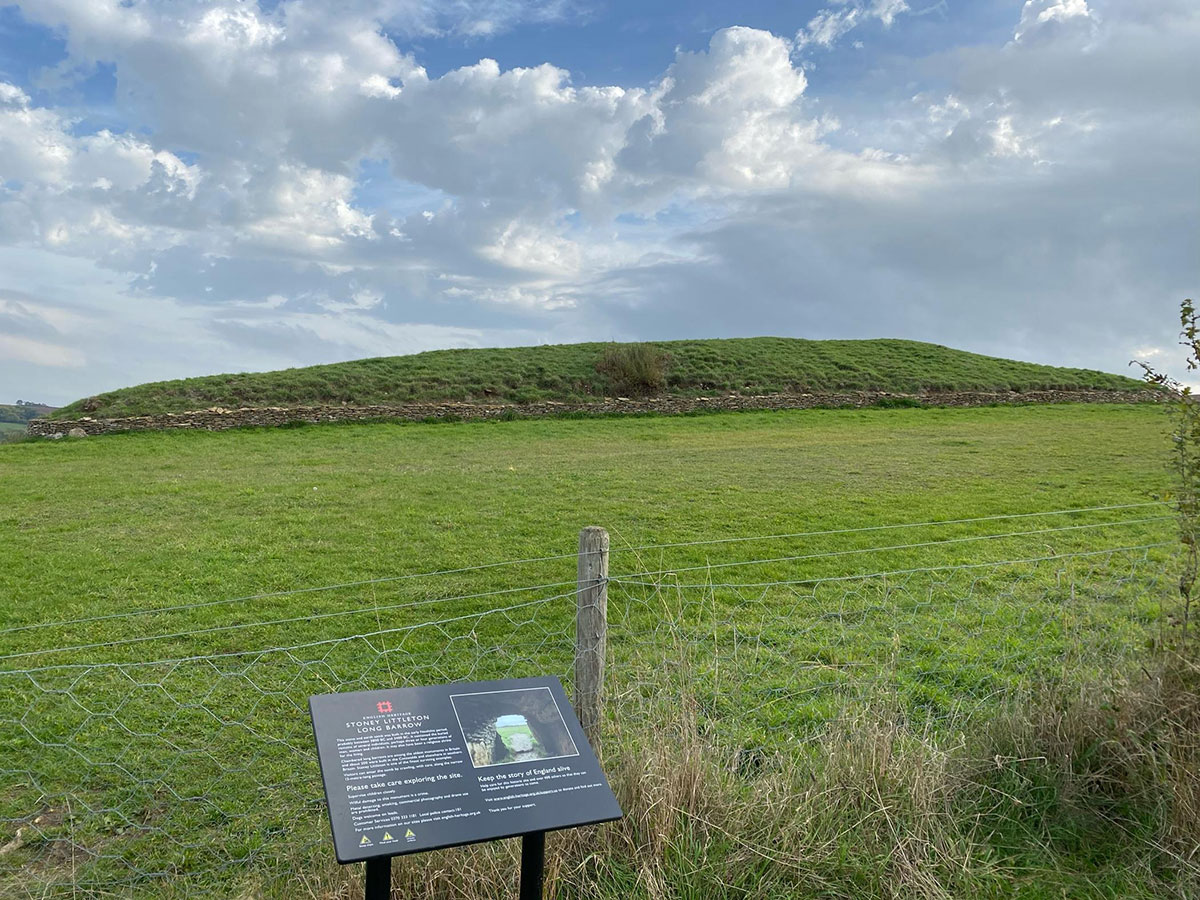
English Heritage - Stoney Littleton Long Barrow

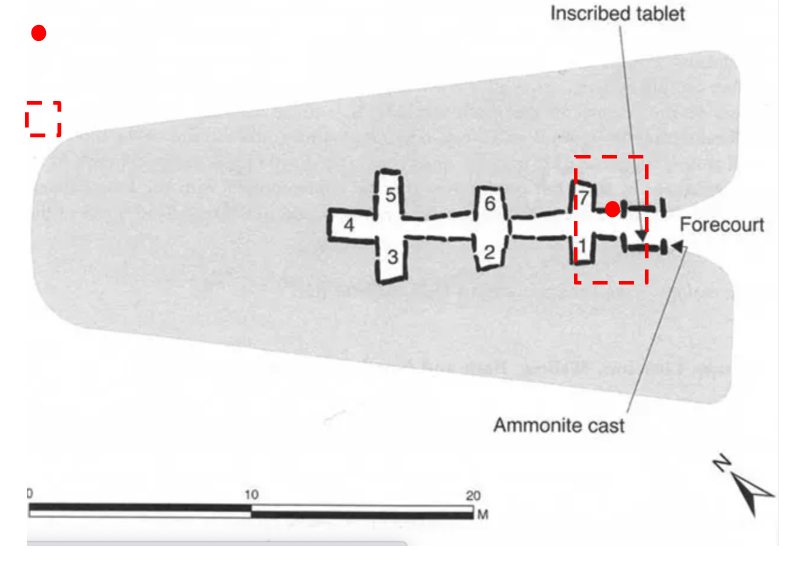
English Heritage identified the need to conduct small-scale restoration works at Stoney Littleton Long Barrow near Bath. The proposals were to protect the internal stonework of the structure by installing a prop inside the doorway. These works were identified to have potential to impact biodiversity therefore Ecology by Design were contacted to provide advice.
A licensed bat surveyor conducted a Preliminary Roost Assessment. The walls of the Barrow comprise loose rubble infill a few metres deep providing:
- Optimal conditions for hibernating bats
- Suitable conditions for transitionally roosting bats (emerging from or prior to going into hibernation)
- Sub-optimal conditions for breeding or summer roosts
At the time of the survey:
- No free-hanging or crevice-dwelling bats were identified within the Barrow.
- No bat droppings were noted on the walls or floor, although woodlice and snails were noted which are likely to readily consume and therefore break down any droppings which may be present.
- A single likely bat dropping was noted c. 50cm deep within the stonework in the vicinity of the prop location.
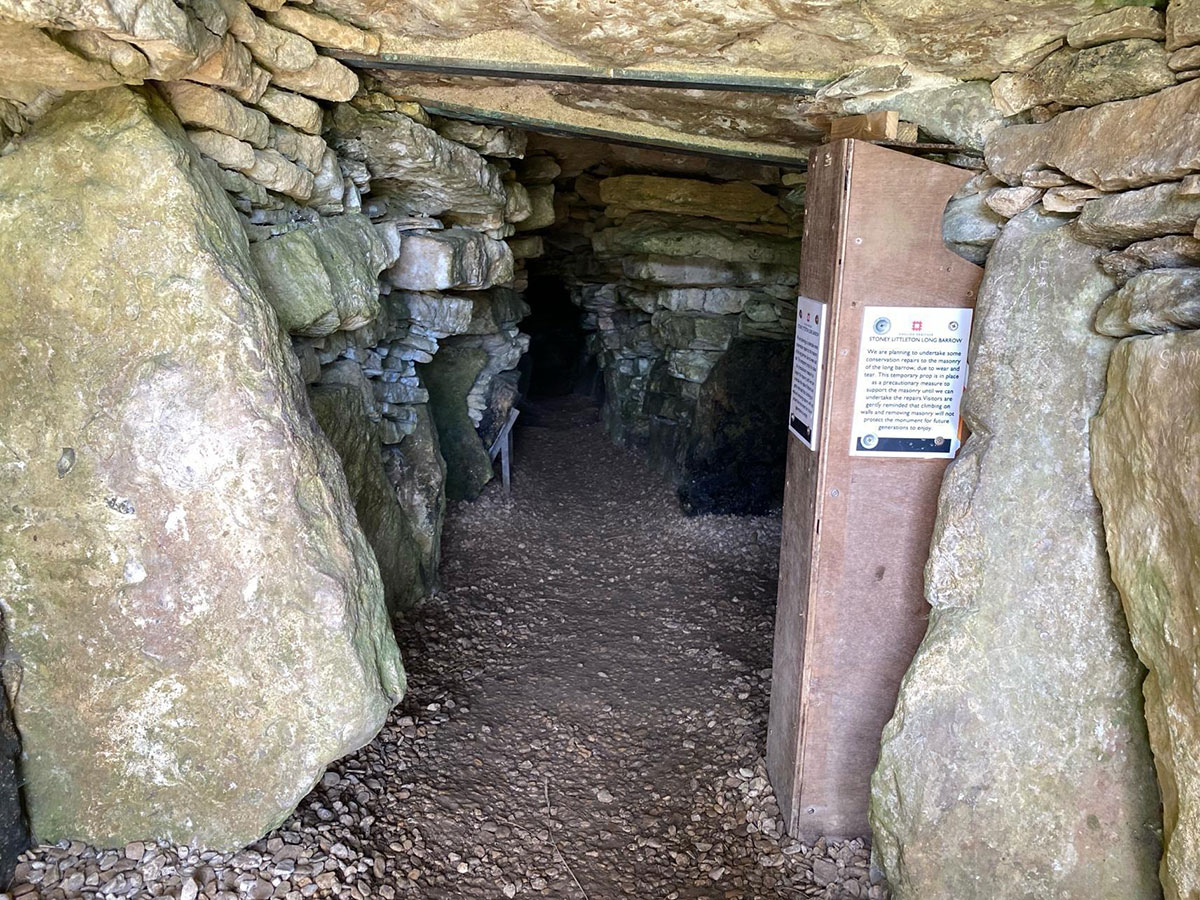
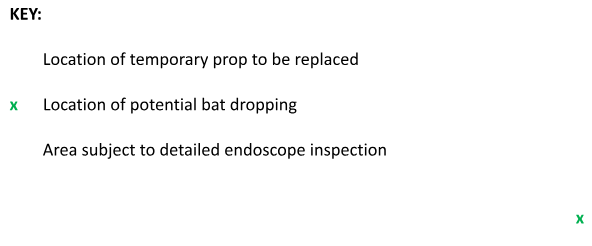
Figure 1: Survey methods and results
A subsequent inspection conducted by English Heritage identified a lesser horseshoe bat in the rear of the chambers during the hibernation period.
Potential Impacts and Recommendations
Because the installation of the prop would not destroy or damage a roost, Ecology by Design confirmed that no further surveys would be needed and a project licence was not required for the works to go ahead. However, the work itself would need to be sensitively timed to take place outside the hibernation period (November to March inclusive) as it could potentially disturb any hibernating bats present in the structure due to noise, vibration, or increased temperatures caused by workers on site.
An update daytime inspection was carried out by a licensed bat ecologist when work started confirming that no bats were present. The prop was successfully replaced, helping to protect both the site’s heritage and its biodiversity, all at a low cost.