Delivering Ecological Certainty on a Complex Heritage and Estate Restoration Project

Photo courtesy of rezMole, Birdforum.net
We were appointed to provide ecological survey, assessment and ongoing advisory support for a high-value Grade I listed estate restoration project currently underway in the UK. The commission covered a series of historic buildings across the estate and required clear, robust ecological input to support the planning application process and inform live design and construction decisions.
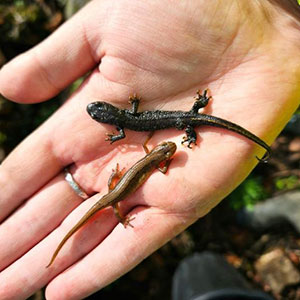 Initial survey work identified a highly sensitive ecological baseline, with multiple bat species and roost types present across the site, including high-conservation value roosts, placing significant legal and seasonal constraints on the programme.
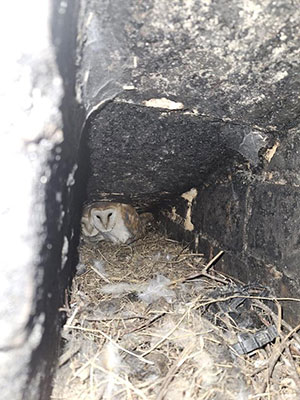
In addition to bats, other protected species present on site included great crested newts and barn owls; both of which also required careful consideration within the work programme.
Our approach
From the outset, our role was to remove uncertainty and risk by embedding ecology directly into the project team. Working closely with the Design and Project Management teams, we ensured that ecological constraints were clearly understood, proportionately managed, and translated into practical solutions that supported the overall programme rather than hindering it.
This was a fast-moving, high-pressure project, with hundreds of contractors on site daily and multiple workstreams running in parallel. Our approach combined rigorous legal compliance with pragmatic, real-time decision-making. This allowed the project to adapt quickly to emerging issues without compromising protected species or delaying works unnecessarily.
Clear communication was central to this process. We provided straightforward guidance that could be applied on site, attended regular coordination meetings, and remained available to advise on last-minute design or sequencing changes. This gave the project team confidence that ecological risks were being actively managed and that solutions would be found, not problems created.
Outcomes and value delivered
The project successfully avoided impacts to bat roosts and other protected species while maintaining momentum. High-quality mitigation, compensation and enhancement measures were designed and delivered for bats, great crested newts, barn owls and other species. These were fully integrated into the wider restoration works.
Crucially, trust was established between the ecology team, project managers and estate staff. Ecological issues were raised early and addressed transparently, removing the fear of unexpected stoppages or enforcement action. This resulted in a collaborative working environment where ecology was seen as an asset to the project, not a risk.


