How We Drive Climate Action As An Ecology Consultancy

The climate crisis is a threat to human health and the economy, and it’s also the biggest threat to nature right now - from iconic species to our most cherished landscapes.
Writing our first ESG report has given me the opportunity to reflect on how our commitment to net-zero aligns with our core purpose of protecting and enhancing biodiversity.
We’ve been calculating our own carbon footprint and taking action to reduce emissions, including using a 100% renewable energy tariff for our office and reducing employee car use.
And we’re also thinking about the wider impact of our work. We contribute to the net-zero transition by supporting clean tech developers to navigate ecology regulations, secure planning permission, and progress smoothly - all while optimising ecological benefits.
In this blog post, we’ll cover:
- Tackling our own carbon footprint
- Supporting the net-zero transition
- Looking towards the future
This post focuses on climate action, but our ESG report gives a high-level overview of how we approach all aspects of sustainability, including social inclusion and governance.
Tackling our own business carbon emissions
At Ecology By Design, environmental responsibility is one of our core values.
People tend to get into the ecology profession because they love nature, wildlife and the outdoors. And we know climate change and nature are interconnected.
With this in mind, we have taken steps to calculate our carbon footprint and reduce our emissions.
Our carbon footprint baseline
Last year, we started calculating our own carbon footprint. We use the Greenhouse Gas Protocol’s categories of Scope 1, 2, and 3:
- Scope 1: This refers to direct emissions from company-owned vehicles, boilers, furnaces, etc. This is zero for us (as our consultants use their own cars).
- Scope 2: This refers to emissions from purchased electricity, heat and steam. Our offices have a 100% renewable energy tariff, so using the market-based approach, our Scope 2 emissions are zero.
- Scope 3: This refers to emissions from our entire value chain, encompassing both upstream and downstream activities. This is the largest source of emissions for most companies and the only one for us. There are 15 sub-categories, and the relevant ones in our case are purchased goods and services, business travel and employee commuting.
Our carbon footprint for 2024 was just under 68 tonnes CO2e. The largest portion of this comes from employee commuting and business travel.
This is based on using average emissions factors from DEFRA and a spend-based model. We are using this as a baseline to track and reduce our carbon going forward and develop our first official carbon reduction targets.
Reducing our carbon emissions
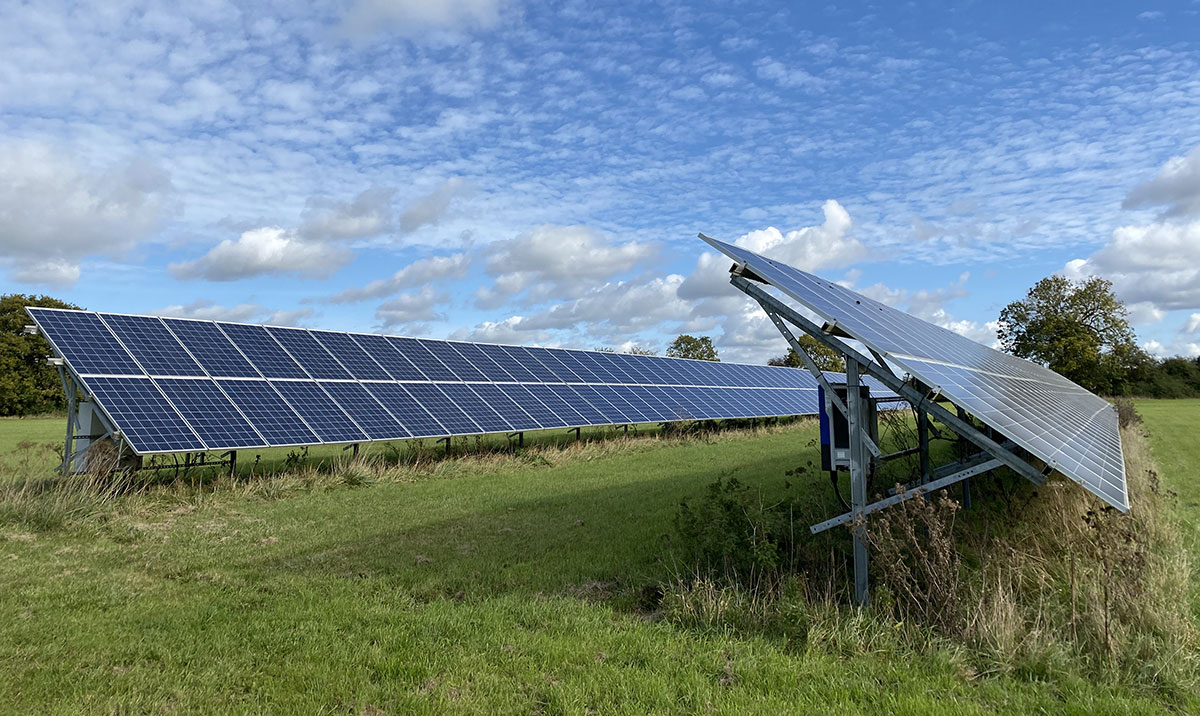
We are taking concrete steps to reduce carbon emissions, including:
- Energy: Our head office in Chalgrove is in a business park powered by 100% renewable energy and has on-site solar panels.
- Transport: We have reduced the average mileage per consultant by 77% over the last 3 years, supported by EV charging points, car sharing and smart resource allocation. This is key as transport is the biggest contributor to our carbon footprint.
- Waste: Our office’s waste management service commits to zero waste to landfill and we have reduced our use of single-use plastics and use eco-friendly cleaning practices.
We also purchase high-quality carbon offsets. We have partnered with Ecologi since 2021, planting 2,240 trees and avoiding 202 tonnes CO₂e through verified projects.
Wider impact: Supporting the net-zero transition
As a consultancy, we have an opportunity to increase our positive impact through our work with clients.
We are increasingly using our ecology skills to support the transition to a sustainable, low-carbon economy. 11% of our projects in 2023-2024 were in the clean tech sector, including renewable energy, battery storage, and carbon capture. We aim to reach at least 25% by 2030.
This sector is the backbone of the country’s net-zero transition. Making sure that clean energy infrastructure respects our natural environment is key to securing planning approval and maintaining public support for a rapid rollout of renewables.
We play a key role by helping our clients achieve planning success so their clean tech projects can go ahead smoothly, while optimising outcomes for nature and wildlife.
Example: Statera Energy
We worked with Statera Energy to secure planning permission for a 500 megawatt battery storage facility in Culham, with best-practice ecological enhancement.
Scaling up battery storage is crucial for providing grid flexibility as the proportion of variable renewable energy increases.
We were commissioned to ensure biodiversity net gain (BNG) was maximised on site, delivering an impressive 62% net gain, well above the required minimum of 10%. This was achieved by allocating 16 hectares to restored and new woodland and grassland habitats.
See this case study for more information.
Example: O.C.O Technology
Another great example is our work with O.C.O Technology to secure planning approval for its sustainable manufacturing and carbon capture facility in Larkshall Mill, Wretham.
O.C.O Technology use an innovative, patented process to react carbon dioxide with solid thermal waste, producing a carbon-negative aggregate called M-LS (manufactured limestone), which has many uses in the construction industry.
For this project, O.C.O Technology aimed to expand its Wretham facility to more than triple production capacity. This required planning consent to develop additional infrastructure on the site. The facility counts as a National Significant Infrastructure Project (NSIP) under the Planning Act 2008.
The plant will capture over 5,000 tonnes of CO2 every year.
Our work ensured that the project could move forward without legal or procedural delays by addressing all relevant ecological risks early, evidencing compliance with legislation, and providing clear and actionable mitigation.
For example:
- We ensured legal compliance by completing a full Preliminary Ecological Appraisal, protected species assessments and Habitat Suitability Index work, ensuring the project complied with the Wildlife and Countryside Act 1981, Habitats Regulations 2017, Protection of Badgers Act 1992, and other relevant legislation.
- We identified bat roosts and highlighted nesting bird risks, advising on appropriate mitigation pathways to ensure compliance.
- We supported the successful planning process by providing a robust CIEEM-compliant Ecological Impact Assessment and completing detailed assessments of designated sites, allowing the developer to show there would be no likely significant impacts.
- We helped to de-risk construction with clear and actionable mitigation measures, including tree protection, bat-sensitive lighting and timing, nesting bird safeguards, and measures to prevent harm to wild mammals during construction.
Norfolk County Council voted 12 in favour and 1 abstention to approve the application.
When he first saw the application, Cllr Robert Colwell said: “To think that a leading company in the world about carbon capture has a plant in Norfolk is really good” and that “it helps the county on our path to net-zero”.
Looking towards the future
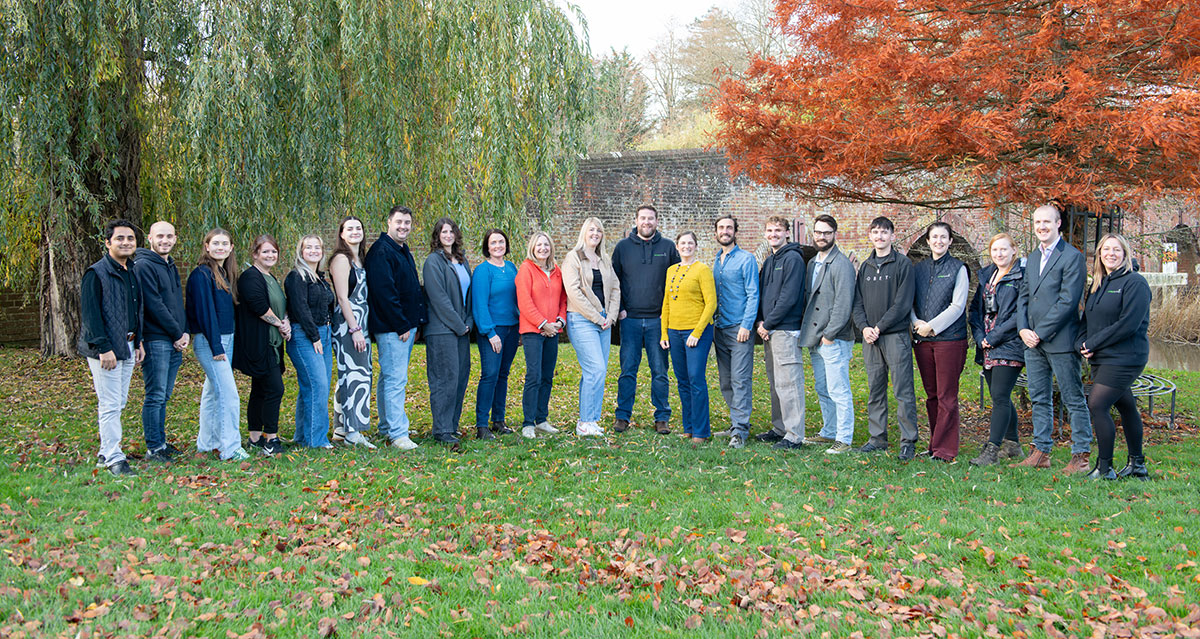
Ecology By Design was founded 10 years ago. Our first decade has been defined by growth, innovation and a strong ethical foundation.
We all share a responsibility to ensure that every project contributes to a healthier and more resilient environment. As we look towards the next 10 years, we want to embed ESG into everything we do and become even more intentional about how we use our ecology skills to drive positive impact for people, climate and nature.
Want to know more about our approach to sustainability?
Need support with your project? Contact Us
Laura Grant BSc (Hons) MCIEEM is Associate Director at Ecology By Design, conducting and coordinating ecological surveys and managing the team in the Chalgrove office. Previously, she worked at BSG Ecology and the Oxfordshire County Council. Laura has worked in ecology for 17 years and is a full member of CIEEM, where she is contributing to various initiatives such as supporting the development of an apprenticeship scheme for ecologists.


