Restoration of a Heritage Structure Under Licence

Simple bat mitigation with real results
Bat mitigation does not need to be complex or expensive to deliver meaningful ecological outcomes. With early planning, proportionate design and skilled workmanship, even small interventions can make a significant difference.
At one of our recently monitored projects, we were pleased to confirm that two bat species are already using mitigation features incorporated into the restoration of a historic tunnel. The structure was sympathetically repaired by Weldon Stone Enterprises Ltd, with ecological mitigation designed alongside the conservation works to ensure the continued use of the site by bats.
Understanding the problem
The tunnel, a heritage structure of considerable age, had suffered from prolonged water ingress and the impacts of inappropriate historical management. As a result, sections of the stonework were deteriorating, with large and localised areas requiring repair or replacement to ensure the long-term stability of the structure.
However, like many older masonry structures, the tunnel also provided valuable roosting and hibernation opportunities for bats. Preliminary ecological surveys identified the tunnel as supporting hibernation roosts for lesser horseshoe bat, Natterer’s bat and brown long-eared bat. Any restoration works therefore required careful consideration and licensing to avoid harm to these legally protected species.
Surveys, licensing and timing
Prior to the commencement of works, we undertook targeted monitoring of the tunnel to inform a European Protected Species licence. This allowed us to understand how bats were using the structure, which features were most important, and how impacts could be avoided or mitigated.
All repairs were scheduled to take place outside the hibernation period in 2025, ensuring that disturbance to lesser horseshoe, Natterer’s and brown long-eared bats was avoided. This careful timing was a critical part of the mitigation strategy and allowed restoration to proceed without compromising bat welfare.
Designing simple, effective mitigation
While some deteriorated crevices could be retained, others were unavoidably lost during essential stone replacement. Mitigation for this loss focused on recreating suitable roosting features in a simple and low-cost way.
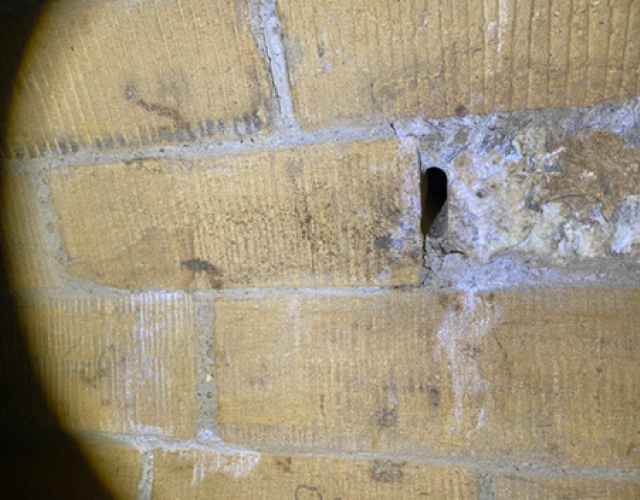
Small gaps were intentionally left within the mortar joints at regular intervals along the tunnel walls, positioned at a range of heights to reflect the diversity of roosting preferences shown by different species. These features were subtle, visually unobtrusive, and fully compatible with the heritage character of the structure, yet capable of providing the narrow, thermally stable spaces favoured by crevice-roosting bats.
This approach demonstrates that effective bat mitigation does not always require bespoke bat boxes or complex engineering solutions. Thoughtful detailing at the construction stage can often deliver better outcomes with fewer materials and lower costs.
Monitoring results: proof that it works
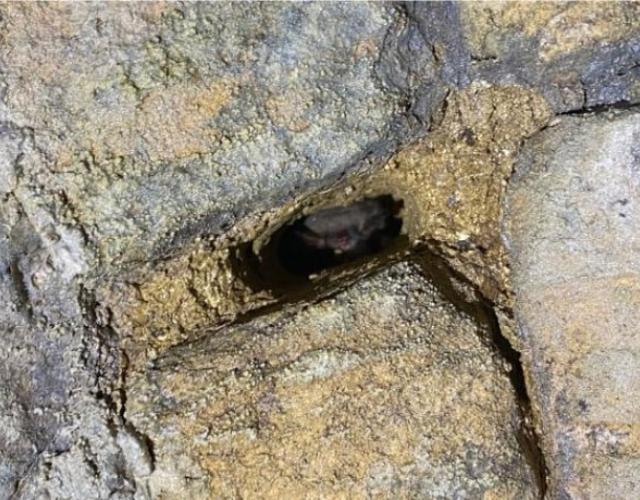
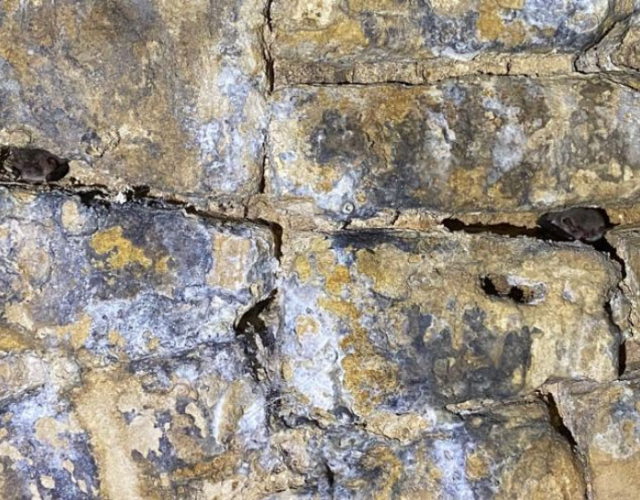
Post-construction monitoring has shown that these newly created features are already being used, in the very first season following their creation. Both Natterer’s bats and brown long-eared bats were recorded occupying the new mortar gaps, with numbers matching those historically present within the tunnel.
This is a particularly encouraging result, as it shows not only uptake of the mitigation features, but continuity of roost use at the site. In one instance, a newly created gap was occupied by a brown long-eared bat, while a retained original crevice nearby continued to support a Natterer’s bat, illustrating how old and new features can function together within a restored structure.
Lessons from the project
This project highlights several key principles of good ecological mitigation:
- Early ecological input allows mitigation to be designed into restoration works, rather than added as an afterthought.
- Proportionate solutions can be highly effective when they are informed by species ecology and site-specific surveys.
- Collaboration with skilled contractors, such as Weldon Stone Enterprises Ltd, is essential to delivering mitigation that works in practice and respects heritage value.
- Monitoring matters – without follow-up surveys, successful outcomes like this often go unrecognised.
A positive outcome for heritage and wildlife
By combining sensitive heritage restoration with straightforward bat mitigation, this project has delivered a genuine win-win outcome. The tunnel is now structurally secure and protected for the future, while continuing to provide valuable roosting and hibernation habitat for bats.
It is a timely reminder that conservation does not always require complex or costly interventions. Sometimes, it is the smallest gaps that make the biggest difference.