30-Year Habitat Management And Monitoring Plans (Hmmps): What Developers Need To Know

As biodiversity net gain becomes a routine part of the planning process, developers are increasingly required to submit a 30-year Habitat Management and Monitoring Plan, often referred to as an HMMP. These documents are now central to how planning authorities secure biodiversity outcomes.
From a commercial perspective, the purpose of an HMMP is not simply to describe habitat management. It should provide confidence that the biodiversity commitments made at application stage can be delivered, monitored and maintained over the long term without creating ongoing uncertainty or risk.
When is an HMMP needed?
A Biodiversity Net Gain metric is typically submitted to inform a planning application and the HMMP and Biodiversity Gain Plan (BGP) are usually needed once planning permission has been granted. They sit alongside the legal agreement which commits to the long-term management of proposed habitats.
Occasionally, where priority habitats are present, a scheme is particularly significant, or proposals are complex, a local planning authority may request a draft HMMP to support the planning application itself. This allows greater confidence that the proposals are realistic, deliverable and capable of being managed successfully over time.
Key factors for an HMMP
In simple terms, it must answer three questions:
- What are we trying to achieve?
- How will we know if it’s working?
- What will we do if it isn’t?
Plans that do not answer these questions clearly are unlikely to satisfy planning authorities, and they expose developers to avoidable compliance risk later on.
Natural England provide a standard HMMP template, which we recommend is always used. It is deliberately structured around clarity and accountability. It asks for specific information on target conditions, management actions, monitoring and remedial measures because these are the areas where schemes most often fail if they are not properly defined. Because of the level of detail required, we would also recommend that this is completed by a suitably qualified and experienced ecologist.
Whilst a strong HMMP does not need to be overly long or technical, it must clearly set out what will be delivered on the ground, when it will be delivered, and how success will be assessed over the 30-year period.
For developers, this clarity is commercially valuable. It reduces the risk of post determination queries, avoids scope creep, and provides a clear framework for long term land management responsibilities.
HMMPs are set for a minimum of 30 years to ensure the long-term, sustainable delivery of BNG. This duration secures habitat enhancements, allowing ecosystems to mature and ensuring measurable, lasting environmental improvement, rather than short-term mitigation.
Defining habitat and condition targets in line with the metric
One of the central elements of the HMMP template is the habitat and condition targets table. This is where the outcomes secured through the biodiversity metric are translated into practical commitments on site.
Planning authorities expect this section to clearly identify the baseline habitat, the target habitat type, the target condition and the timeframe for achieving that condition. Importantly, the HMMP also requires confirmation of which condition assessment criteria will be met to achieve the target score.
This level of detail is critical. It allows future monitoring to be objective and avoids ambiguity around what constitutes success. From a developer perspective, it ensures that the obligations secured through planning are fixed and transparent, rather than open to interpretation years down the line.
Management prescriptions need to demonstrate deliverability
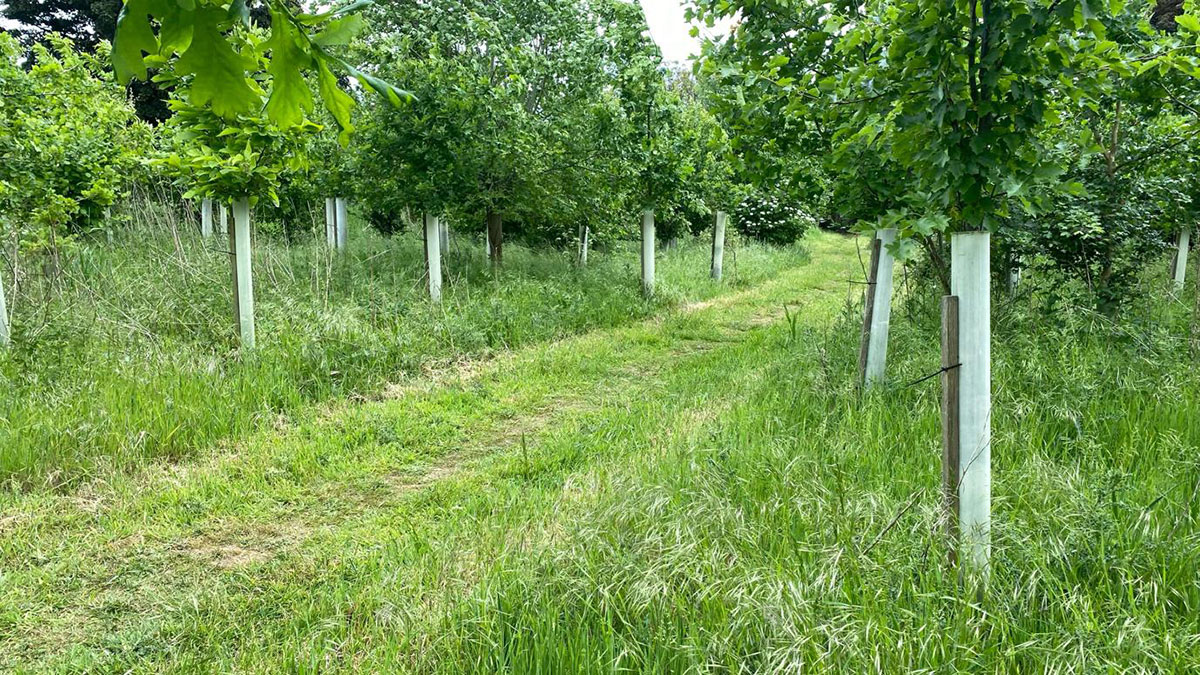
The HMMP template places significant emphasis on creation, enhancement and management prescriptions. This is where the plan must demonstrate that the target conditions are realistically achievable within the agreed timescales.
Well prepared prescriptions explain how management actions will support habitat establishment and progression through time. They show that soil conditions, hydrology, access constraints and future land use have been considered, and that management has been tailored accordingly.
This does not require excessive technical detail, but it does need enough information to demonstrate that the proposals are practical, proportionate and capable of being implemented by a competent land manager. Crucially, prescriptions should explain:
- What happens
- When it happens
- Why it happens
Monitoring schedules should align with decision making
Monitoring within an HMMP is not intended to be academic. Its purpose is to provide evidence that habitats are developing as expected and to inform decisions about ongoing management.
The HMMP template therefore requires clear monitoring methods, intervals and reporting arrangements. For developers, this is an opportunity to define a monitoring regime that is proportionate, cost effective and aligned with the key risk periods for habitat establishment.
By agreeing this upfront, monitoring becomes a predictable and manageable commitment, rather than an open ended obligation that evolves over time.
Remedial measures reduce long term risk
A key strength of the HMMP template is that it includes a habitat creation and management risk register. This recognises that not all habitats will perform as expected and that external factors can influence outcomes.
By identifying risks, setting triggers for action and agreeing remedial measures in advance, the HMMP provides a clear mechanism for addressing underperformance without dispute. For example:
- If more than 10% of newly planted trees fail within Years 1–5 → replant like-for-like
- If scrub exceeds 10% cover → additional control works implemented within 12 months
For developers, this significantly reduces long term risk by avoiding uncertainty around what might be required if habitats fail to establish or decline. In commercial terms, this approach protects against unplanned costs and enforcement scenarios later in the life of the development.
Adaptive management keeps the plan commercially workable
The HMMP template also requires consideration of adaptive management. This is not about changing targets arbitrarily, but about responding sensibly to monitoring evidence over time.
A well drafted HMMP explains how monitoring results will be reviewed, how changes to management will be agreed, and how those changes will be recorded. This creates a practical feedback loop that allows the plan to remain effective over 30 years, even as site conditions, climate and land use pressures evolve.
For developers and landowners, this flexibility is essential to keeping long term obligations realistic and manageable.
Why getting the HMMP right matters
A detailed management plan:
- Eases determination and/or streamlines discharge of planning conditions
- Provides long-term cost certainty
- Supports smoother land transactions
- Minimises compliance risk
Ultimately, an HMMP is not just an ecological document. It is a commercial tool that when prepared properly, protects delivery, manages risk and supports successful development outcomes alongside biodiversity net gain.


