Turning Passion into a Profession: Getting Started and Standing Out in Ecological Consultancy

In September's issue of CIEEM's "In Practice" magazine, we look at how you might start a career in ecology. Laura Grant, Associate Director at Ecology by Design discusses less traditional routes in to the profession, how to make your application stand out and the top skills you'll need to build a successful career in the field (literally!).
Since 2015, Ecology by Design has grown into a 30-strong team. That growth has opened doors for a wider range of hires, including those without ecology degrees but with a passion for wildlife and strong transferable skills. This article shares what we look for in applicants, how to stand out and the practical steps that can help you land a permanent job as a consultant.
Introduction: getting into the sector or changing sectors
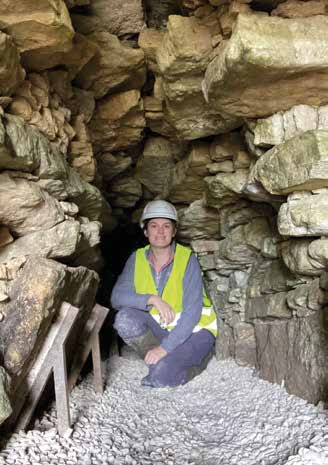
The ecology sector has changed a great deal over the past 20 years. Traditionally, those entering the profession might have followed a well-trodden route: a degree in ecology or zoology, perhaps a master’s degree, a bit of volunteering and then a first seasonal role with the hope of securing a permanent job. That pathway still exists and it works for some. But it’s far from the only way in.
Today’s consultancies require a broader range of skills to meet increasingly complex demands. Alongside species identification and survey work, we need people who are comfortable using geographic information systems (GIS), managing projects, handling data, writing reports and communicating with clients and stakeholders. As a result, transferable skills are more valued than ever (see Box 1). Whether developed through teaching, trades, customer service or creative industries, they can provide a solid foundation for a successful ecological career.
At Ecology by Design, we’ve seen this shift firsthand. Our growth has given us more flexibility in how we recruit. We now have the confidence to hire people without ecology degrees; people who are passionate about wildlife and bring strong transferable skills, even if their career so far has been in an entirely different sector. We’ve welcomed team members who previously worked as teachers, plumbers, translators and illustrators, and they’ve all brought something valuable to the team.
This article is written for anyone looking to get a foot in the door, whether as a graduate, a career changer or someone returning to the sector. We’ll explore the different ways into ecological consultancy, share examples of what we look for in applicants at all levels and offer practical advice on writing a CV and cover letter that stand out for the right reasons. We’ll also reflect on the skills that really matter in the workplace, and how to demonstrate your potential, even if your path to ecology has been far from conventional.
Box 1. Top ten transferable skills we love
- Project management
- Communication skills
- Problem-solving
- Time management
- Confidence (not ‘fake it till you make it’, but ‘face it until you ace it’)
- Customer service
- Conflict resolution
- Attention to detail
- Teamwork/people skills
- Strategic thinking
Building connections: why networking matters
Formal education can be one part of the picture, but who you know, and how you connect, matters just as much, especially in the small world of ecology.
Personal connections count. Attend wildlife conferences and CIEEM courses(both offer student discounts), and go to local talks and on walks. Connect with others on LinkedIn or local Facebook groups. Look for opportunities to meet ecologists and start conversations.
If you’re super targeted, use the CIEEM Registered Practices directory to find consultancies local to you. Direct contact shows initiative and often creates more meaningful connections than applying via a recruiter. Send your CV even if they are not advertising a position. The worst they can do is ignore it, but a good consultancy will often invite you for an informal chat, even if no job is currently advertised. Such chats with experienced professionals can give you great insight into what they’re looking for, how to strengthen your application and if there’s a particular time of year when recruiting (for us it’s typically November and March–May).
Case studies of career changers

Nick Boyd: from linguist to ornithologist

Ross Hellier: from teacher to river condition assessment technician
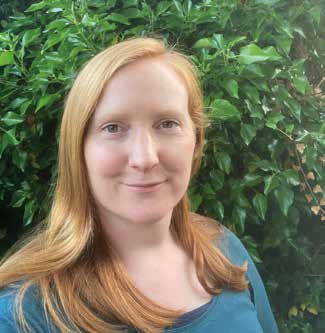
Anna Mackellar: from publishing to assistant ecologist
What we look for in applicants: insights from a small/medium consultancy
Having a driving licence is often essential, although we recognise that this can be a barrier (and it may not apply to every consultancy or role). For a small or medium-sized consultancy like ours everyone needs to be able to get to our reasonably remote offices and our even more remote sites. Public transport is often just not available. In addition, there’s a kit to carry around and a need to be flexible and reactive to last-minute changes caused by unpredictable factors like the British weather.
What we look for in graduates
For graduates of any sort, it’s great if you’ve done any of the following.
- Selected relevant degree modules. Demonstrate that you have tailored your degree to align with your interests.
- Completed a year in industry. We personally offer positions to interns every year and know how valuable it can be to develop well-rounded survey and consultancy skills before graduating.
- Gained paid work experience. A role involving customer service such as working in a pub or supermarket, and jobs like marshalling at a stadium, cleaning and babysitting all show that you have valuable life skills.
- Joined a team or society. Whether a quiz team, crafting group or sports team, it gives us insight into what you’re like as a person.
- Taken on a long-term challenge like the Duke of Edinburgh awards or raised money for charity or an expedition. These show commitment and endurance.
For those studying for a degree of any sort and wanting to become an ecologist, you can be particularly savvy and use your summer holidays to get some paid survey experience. Our peak survey season is April–September and during this time many consultancies need extra hands and eyes to conduct surveys and/or act as health and safety seconds. Consultancies may offer an hourly rate at the real living wage or higher if you already have some experience.
Tips for those without a degree
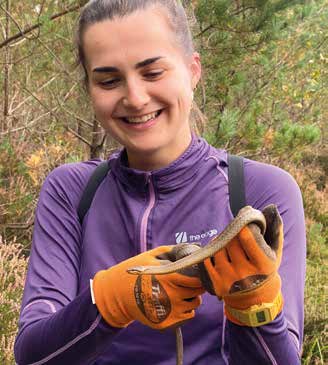
For anyone, but especially people who haven’t done a degree, it is a huge win if you’re a long-time natural history enthusiast. If you’ve watched Countryfile since you were young, joined foraging courses and/or had the opportunity or inclination to get outdoors and study what’s around you, that’s even better. This passion, alongside desirable qualities such as being proactive, effective at problem-solving and reliable, and having strong communication skills and attention to detail, gives you a really strong foundation.
We recognise that volunteering is a privilege not everyone can afford. If you’re from a low-income household and are working multiple jobs or have a young family, it may not be possible for you to get out and volunteer. That’s totally understandable and it’s great if you’re open about the constraints you’ve faced. If you do have the means and opportunity though, volunteering with a relevant organisation can improve your skillset and help provide examples at interview. Organisations that are a green flag for us include local Wildlife Trusts, Local Record Centres, bird, mammal or herptile groups, local or national citizen science projects, habitat management groups or ‘Friends of’ groups for local parks. Each of these can provide opportunities to identify habitats, increase your identification skills, learn from like-minded individuals experience some of the challenges that fieldwork can bring. Apprenticeships, though still relatively few, are growing in number and offer structured ways to earn while learning in the field. We can’t wait for the CIEEM Level 4 Apprenticeship to be up and running!
How to craft a compelling CV and application
Having a passion for ecology is important, but it also needs to come across clearly and professionally in your application, especially if you don’t have an academic background. In a competitive field, a well-structured CV and a thoughtful covering letter can make a real difference (see Box 2).
Box 2. CV red flags
Even strong candidates can miss out if they don’t present themselves clearly. Here are five things that often raise red flags for us during recruitment.
- Evidence of job hopping
- Poor spelling and grammar in an application
- Unformatted text in an application
- Using synonyms to sound clever
- Extensive life history: focus on the roles most relevant to the job you’re applying for
Keep it clear and focused
We’re looking for relevance and clarity. ACV should ideally be no more than two pages, with a clean, simple layout and a logical order. Use clear section headings, bullet points, and white space to make scanning easy. A busy layout or excessive graphics can be distracting and may not print well. Use consistent formatting, and check and re-check for typos.
Tailor it to the role
Avoid using a generic CV. Instead, take time to match your experience to the specific job and organisation. Focus on what the employer is actually asking for, and highlight relevant experience clearly, even if it comes from outside the sector.
Show, don’t just tell
If you claim to have strong attention to detail, make sure your application reflects that. Provide brief examples that demonstrate your strengths. A short summary of a project or volunteer role, for example, can be a great way to show initiative and problem-solving skills.
Showcase your soft skills
Working for an ecological consultancy is as much about teamwork, communication and resilience as it is about species identification and survey effort. We’re always looking for people who can collaborate, write clearly, keep calm under pressure and engage professionally with clients. Don’t shy away from including examples that demonstrate these skills.
Demonstrate commitment
Ecology roles often involve early starts, long days and challenging field conditions. We’re looking for people who are prepared for this reality and can show a genuine interest in the work involved. You don’t need a long volunteering history to prove you’re committed. There are many other ways to demonstrate that you’re ready to take on the demands of the job:
- relevant experience in any role that involves physical work, working outdoors, shift patterns or unpredictable conditions, such as hospitality, outdoor education, farming, landscaping or construction
- personal projects or hobbies that show an active interest in wildlife or the environment, like recording species on iNaturalist, maintaining a nature-focused blog, learning plant or bird identification, or managing a wildlife-friendly garden or allotment
- demonstrating resilience through life experiences such as juggling study and work, managing caring responsibilities or making a proactive career change all suggest commitment, adaptability and perseverance
- being upfront about your drive to enter the sector, especially if you’ve had to overcome barriers such as working full time, raising a family or changing careers later in life.
Use your covering letter wisely
This is your chance to tell your story and explain why you’re applying. Focus on why the role matters to you and how your skills and experience fit, preferably on one page of A4, two at most. Show enthusiasm, awareness of the role and a genuine interest in developing a career in the sector. The covering letter can often be what sets one applicant apart from another.
Be careful with AI
AI is a fantastic tool; however, be careful about how you use it. A good CV should give an insight into your personality, which AI won’t necessarily be able to portray.
Share your hobbies and interests
Hobbies and interests can help your application stand out, especially in small teams where fieldwork often involves long hours with your teammates. Whether it’s gaming, gardening, niche crafts or extreme sports, sharing your interests can help build rapport and strengthen your application as we’re always thinking how we can create well-rounded teams.
Conclusions
There’s no single, linear route into a career in ecology and that’s a good thing. As environmental challenges background is in teaching, publishing, languages or something entirely different, there’s room and need for your experience. For those hoping to get a foot in the door, perseverance and curiosity go a long way. A well-crafted CV, a willingness to keep learning and the confidence to start conversations can count for more than an academic pathway. Those of us hiring aren’t always looking for the person who knows everything, but for someone who shows they’re ready to grow, work hard and be part of a team. Ultimately, we’re looking for people who understand what the role involves and are still excited by it. Show us that you’ve thought it through, that you’re prepared to put the work in and that you’re genuinely motivated by the opportunity to make a difference.The future of ecology depends on a diverse, resilient workforce, one that reflects the complexity of the systems we work to protect. If you’re thinking about entering consultancy, don’t wait for the ‘right time’. Make the call, send the email, join the conversation. There’s space here for you.
Article reproduced by kind permission of CIEEM.


