Wretham Carbon Capture Facility DCO, Norfolk

Delivering a robust ecological strategy to support a DCO for nationally significant low carbon infrastructure (NSIP) within a sensitive designated landscape.
Project Overview
Ecology by Design was appointed by O.C.O Technology Ltd to deliver ecological assessment and support for a Development Consent Order (DCO) application within one of England’s most sensitive designated landscapes.
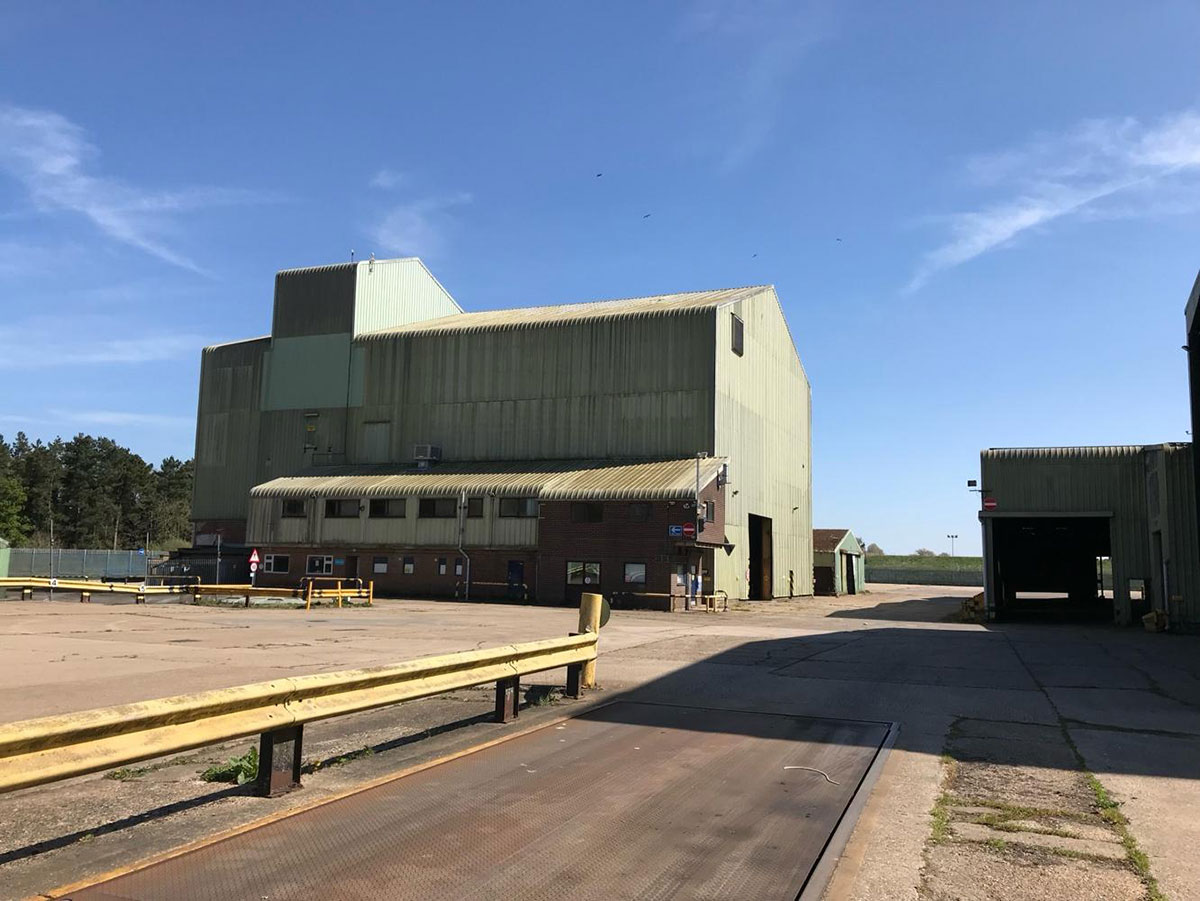
This pioneering carbon-negative aggregate manufacturing facility at the former Larkshall Mill Recycling Facility, East Wretham, Norfolk was granted planning permission in 2022.
The proposal represented a nationally significant infrastructure project (NSIP) supporting the UK’s transition to net zero through innovative carbon capture technology, located within a highly sensitive ecological landscape adjacent to the Breckland SAC/SPA and Breckland Forest SSSI.
The challenge was to deliver a robust ecological evidence base and strategy capable of supporting DCO consent while demonstrating environmental responsibility.
The Ecological Challenge
The site sat within a complex ecological setting including:
- 0.4 km from Breckland SPA / SAC
- Proximity to multiple nationally and internationally designated sites
- Potential impacts on:
- Breeding stone curlew and woodlark
- Air quality pathways
- Confirmed bat roosts within site buildings
- Mature retained trees with bat roost potential
- Nesting bird constraints
- Habitat regulation assessment requirements under Breckland policy
The project required a careful balance between enabling nationally important net-zero infrastructure and ensuring no adverse ecological effects on protected features.
Our Approach
Ecology by Design designed and delivered a proportionate, evidence-led ecological strategy including early ecological constraint identification, comprehensive desk study, Preliminary Ecological Appraisal, bat roost assessment, badger survey and great crested newt HSI assessment undertaken at project inception to shape design evolution.
Confirmed bat roosts were identified within retained and demolition buildings. Further survey effort was proportionately scoped to establish conservation significance and inform mitigation design.
A project-level shadow HRA screened pathways to Breckland SPA/SAC interest features including:
- Stone curlew disturbance risk
- Woodlark habitat loss potential
- Air quality deposition pathways
- Operational noise and visual disturbance
Avoidance and mitigation were designed directly into proposals, including:
- Full tree retention and safeguarding
- Lighting controls
- Bird nesting protection measures
- Construction safeguards for wild mammals
- Net gain through targeted bat and bird box provision
The Outcome
The final ecological position concluded no significant adverse ecological effects with opportunities for measurable biodiversity enhancement through increased bat roost provision, additional bird nesting opportunities and long-term habitat safeguarding
The DCO application proceeded with strong local authority support and unusually positive planning committee feedback.
Stakeholder Response
The project was specifically commended for its transparent and collaborative engagement approach.
Cllr Robert Colwell described the scheme as “Really encouraging and exciting to hear that it’s worked, that it’s working well… to think that a leading company in the world about carbon capture has a plant in Norfolk is really good.”. He further recognised its contribution to Norfolk’s wider net zero ambitions.
Cllr Martin Storey stated it was “Refreshing to hear how a planning application, in my opinion, should be done… A leaf we should all take out of a book when a planning application comes forward.”.
Chairman Cllr Brian Long praised the project’s community integration stating “The liaison with the local community is about being a good neighbour… working within the community, not just doing stuff to it – absolutely spot on.”.
Cllr Paul Neale summarised the broader principle that “It’s not rude to make a profit, it’s how you make it.”.
Why This Matters
This project demonstrates that ecological assessment for nationally significant infrastructure works best when it is:
- Proportionate rather than precautionary for its own sake
- Embedded early in project design
- Transparent and collaborative
- Focused on enabling sustainable development rather than simply identifying constraints
It shows how ecological consultancy can actively facilitate delivery of transformative low-carbon infrastructure while strengthening trust between developers, decision-makers and local communities.
For further information contact:
Laura Grant BSc (Hons) CEcol MCIEEM
Associate Director, Ecology by Design Ltd
Tel: 01865 893348
Mob: 07495 002130


