Paradise Fields, Hemel Hempstead

Client: Dacorum Borough Council
Location: Land north of the A414, Hemel Hempstead, Hertfordshire
Planning Reference: 20/02519/MFA
Planning Consent Granted: 2020
Development Completion: 2024/25
Ecological Outcome: +7.23% Biodiversity Net Gain
Monitoring Status: Year 1 completed (2025)
The Challenge
Delivering new homes while protecting and enhancing biodiversity is often framed as a conflict between environmental ambition and development delivery.
At Paradise Fields, Ecology by Design demonstrated that this need not be the case.
Commissioned to support a residential scheme delivering 58 new apartments with associated access, outdoor amenity space and play provision, our challenge was to ensure biodiversity enhancement was not simply mitigated around the edges of development, but embedded within the project’s design and secured through long-term management.
Importantly, this project was consented in 2020, several years before Biodiversity Net Gain (BNG) became mandatory in England. This meant designing measurable biodiversity uplift ahead of legislative requirement, applying the DEFRA Biodiversity Metric 2.0 to create a robust, evidence-led strategy capable of delivering genuine ecological gain alongside housing growth.
The site presented several ecological and spatial constraints, including habitat loss associated with development and the need to ensure that nearby Local Wildlife Site grasslands could be enhanced to compensate for unavoidable impacts. The solution required ecological design that worked not only on paper, but in practice over the long term.
Our Approach
Ecology by Design undertook a full Biodiversity Impact Assessment to quantify losses and opportunities using the DEFRA metric. Initial calculations identified:
- A loss of 5.37 habitat units associated with development
- A gain of 0.59 linear habitat units on-site
- A requirement for strategic off-site enhancement to deliver measurable uplift
To address this, we developed an integrated biodiversity enhancement strategy combining on-site habitat creation and off-site grassland enhancement.
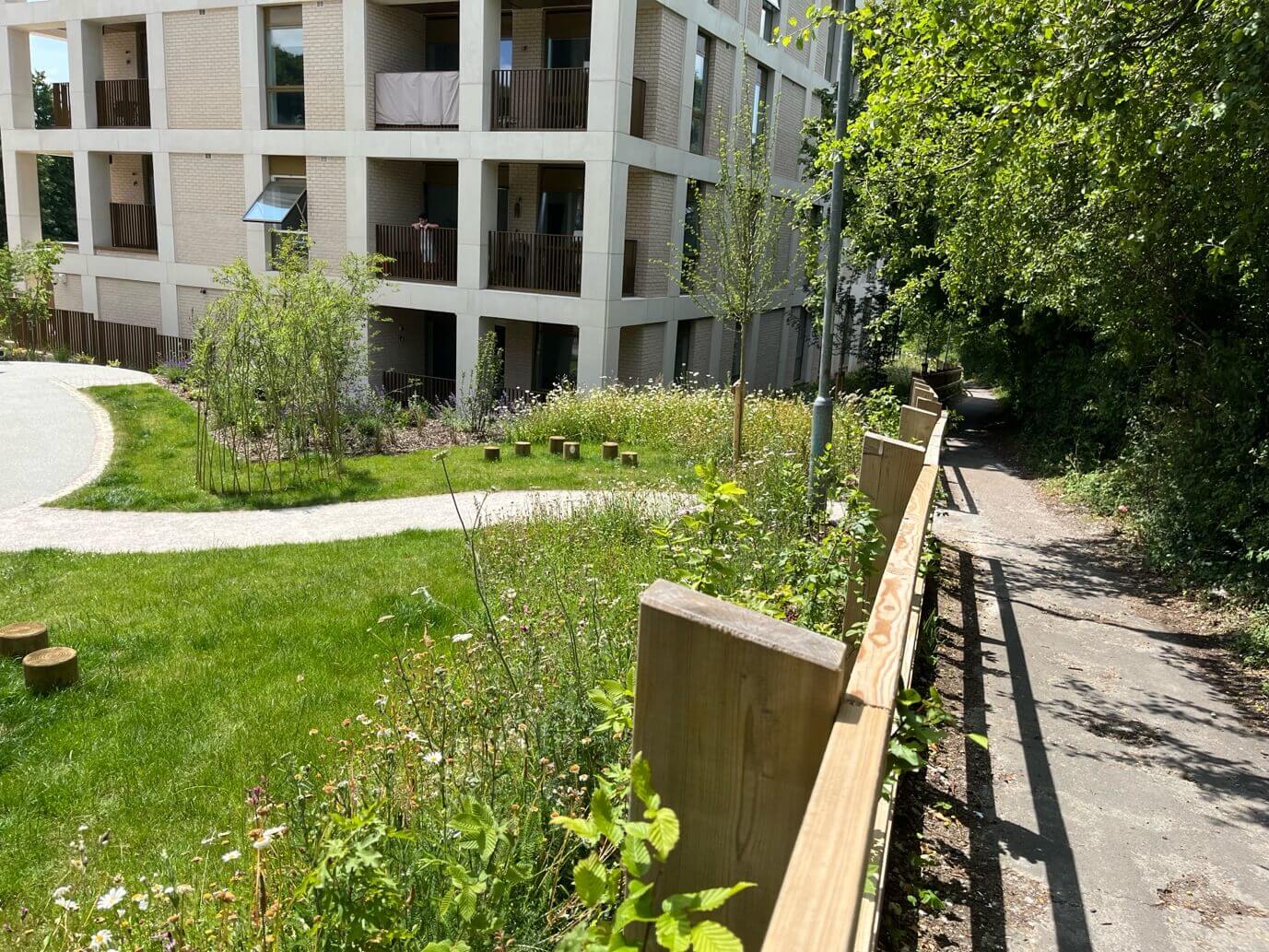
A network of newly created habitats was incorporated into the development footprint, including:
- Species-rich other neutral grassland
- Native hedgerow planting
- Structural planting and landscape connectivity features
- Woodland enhancement works
These habitats were designed to contribute ecological function while supporting the residential setting through high-quality green infrastructure.
Three adjacent neutral grassland fields forming part of a Local Wildlife Site were brought into active ecological management. Enhancement measures included:
- Long-term hay-cutting regimes
- Arisings removal to reduce nutrient enrichment
- Botanical diversification
- Structural management to improve habitat condition
These enhancements were secured through long-term management commitments to ensure biodiversity gain was sustained and measurable over time.
A programme of long-term ecological monitoring was secured through planning condition, enabling habitat performance to be assessed and management refined where necessary. This adaptive approach is fundamental to successful biodiversity net gain delivery.
The Outcome
The scheme was designed to achieve +0.77 habitat units, equivalent to a +7.23% biodiversity net gain.
Construction of the residential development was completed during 2024/25, with Year 1 post-construction ecological monitoring undertaken in June 2025. Monitoring assessed:
- Condition of enhanced off-site grassland parcels
- Condition of enhanced on-site woodland
- Establishment success of newly created habitats
- Compliance with approved ecological management plans
- Need for remedial intervention
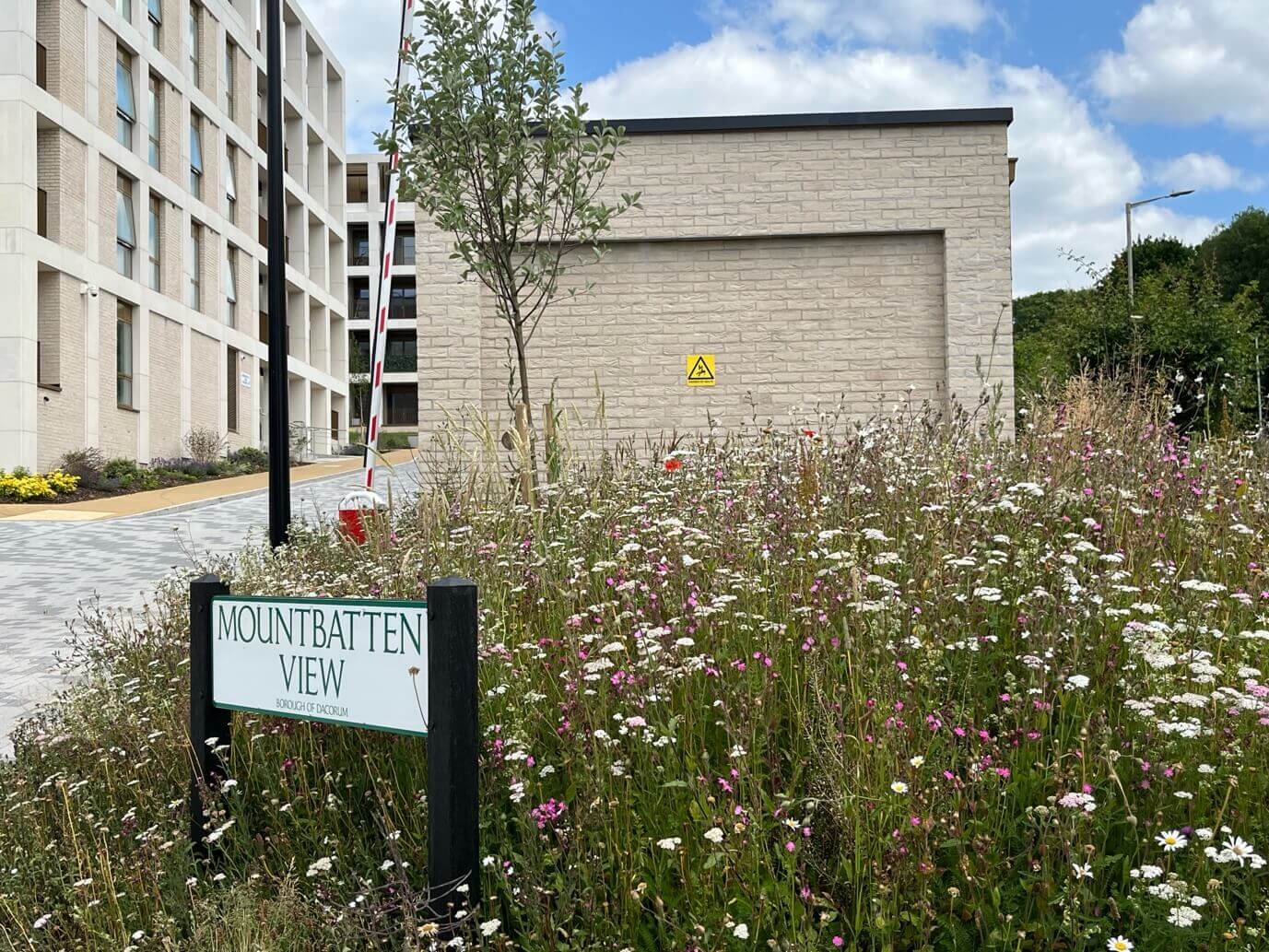
The results demonstrate strong early progress. All newly created habitat parcels were confirmed to have been implemented in accordance with approved planting plans. Species-rich grassland areas showed successful establishment of key forb species including:
- Oxeye daisy
- Common knapweed
- Ribwort plantain
- Wild carrot
- Yarrow
- Red campion
Native hedgerows were establishing well, with healthy structural diversity across planted species including hawthorn, field maple, guelder rose, hazel and dogwood. These habitats will undergo formal condition assessment from Year 2 onwards.
Two of the three off-site grassland fields achieved moderate condition, demonstrating positive species diversity and presence of characteristic unimproved grassland indicators. Botanical indicators included:
- Agrimony
- Rough hawkbit
- Common knapweed
- Bird’s-foot trefoil
- Field scabious
- Wild basil
- Pyramidal orchid
This confirms ecological enhancement is progressing toward the target of good condition grassland.
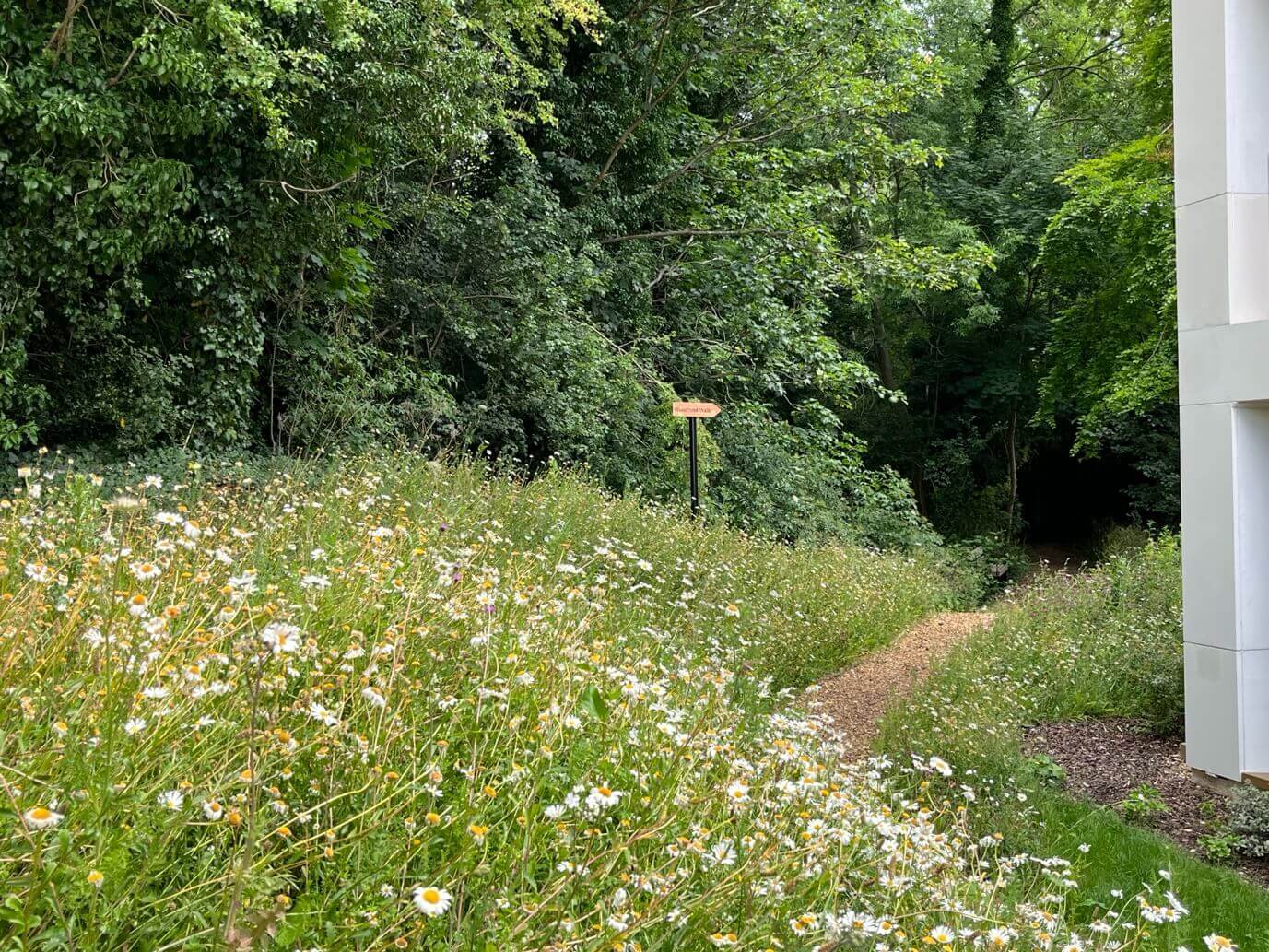
The retained woodland parcel also achieved moderate condition, with management recommendations identified to improve ground flora quality and address invasive species pressures.
Adaptive Management in Action
One of the most valuable outcomes of Year 1 monitoring was the identification of targeted remedial actions to ensure habitats remain on course to achieve their long-term condition targets.
Recommendations included:
- Goldenrod control: Removal of localised non-native invasive goldenrod stands before wider establishment.
- Scrub reduction in Field 4:Ecologically supervised scrub clearance to reverse succession and restore species-rich grassland potential.
- Green hay transfer:Transfer of seed-rich hay from higher-value meadow areas to accelerate botanical diversification.
- Woodland ground flora restoration:Selective removal of undesirable species and woodland flora enhancement measures.
This demonstrates what effective BNG delivery should look like. Not static compliance, but responsive ecological stewardship informed by evidence.
Why This Matters
Paradise Fields provides clear evidence that nature-positive development is not at odds with housing growth.
It shows that when ecology is integrated early, supported through design, secured through management and verified through monitoring, development can deliver measurable biodiversity uplift alongside high-quality homes.
Perhaps most importantly, it demonstrates that this approach was being successfully delivered years before mandatory BNG legislation came into force.
BNG did not invent nature-positive development. It formalised best practice already being delivered by forward-thinking clients and ecological consultants committed to measurable outcomes.
Ecology by Design continues to support clients in delivering practical, measurable biodiversity net gain through strategic ecological design, robust assessment and long-term monitoring that ensures ecological commitments become ecological outcomes.
For further information, contact:
Oli Bulpitt BSc (Hons) ACIEEM
Senior Ecologist, Ecology by Design Ltd
Tel: 01865 893346
Mob: 07375 387743


